

WHAT IS SQL INJECTION (SQLi)?

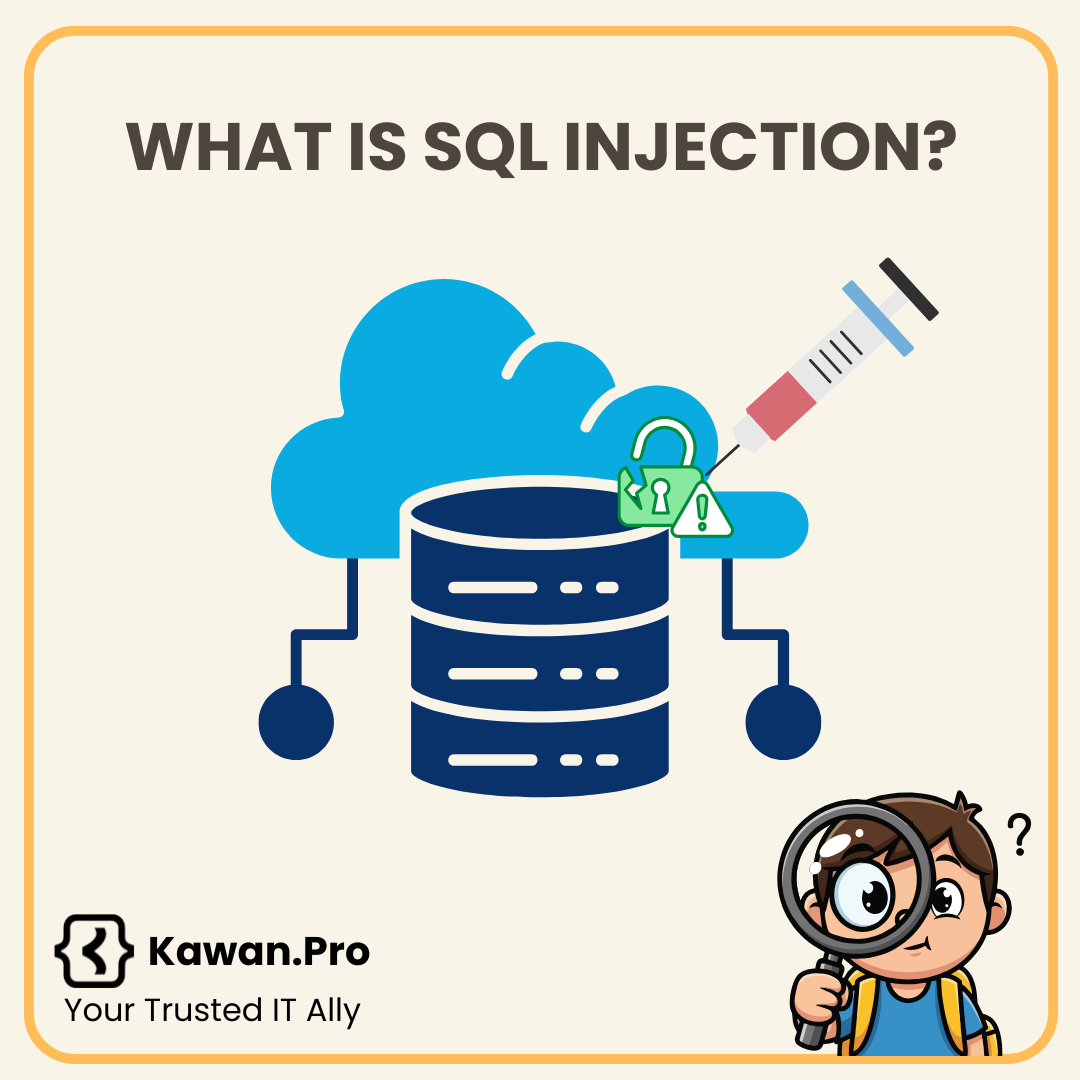
SQL Injection (SQLi) is a web security vulnerability that allows attackers to interfere with an application’s database queries. By injecting malicious SQL code into input fields (such as login forms, search boxes, or URLs), attackers can trick the database into revealing, modifying, or deleting sensitive data.
When the application does not properly validate user input, the database executes the attacker’s commands as if they were legitimate.
SQLi = attacker injects SQL query → database executes it
KEY FUNCTIONS OF AN SQL INJECTION ATTACK
Execute Malicious SQL Commands = Runs attacker-controlled database queries.
Steal Sensitive Data = Exposes usernames, passwords, personal data, or payment info.
Authentication Bypass = Logs attackers in without valid credentials.
Modify or Delete Data = Changes records or wipes entire databases.
Gain Full Database Control = In severe cases, attackers can take over the backend system.
WHY IS SQL INJECTION DANGEROUS?
✔ Directly targets critical databases
✔ Can expose confidential business and user data
✔ May allow full system compromise
✔ Often easy to exploit if protections are weak
✔ One vulnerable input can expose the entire database
Without proper protection, SQL Injection can completely destroy trust in a web application.
COMMON TYPES OF SQL INJECTION
In-Band SQLi – Attacker uses the same channel to inject and retrieve data
Blind SQLi – No direct output, attacker infers data using true/false responses
Time-Based Blind SQLi – Uses delays to extract information
Out-of-Band SQLi – Data is exfiltrated through a different channel
Error-Based SQLi – Database error messages reveal sensitive details
HOW TO PREVENT SQL INJECTION
✔ Use prepared statements / parameterized queries
✔ Validate and sanitize all user inputs
✔ Apply least-privilege access to database accounts
✔ Disable detailed database error messages
✔ Keep databases, frameworks, and libraries updated
FOUND THIS HELPFUL?
👍 Like if you learned something new
🔁 Share to spread cybersecurity awareness
🔔 Follow for more simple cybersecurity explainers
Subscribe to our newsletter so you don’t miss our informative insights!
Visit

and subscribe today 🚀